
Executive Function & Task Completion
Printed Resources

Task Completion Cards • Printed Deck
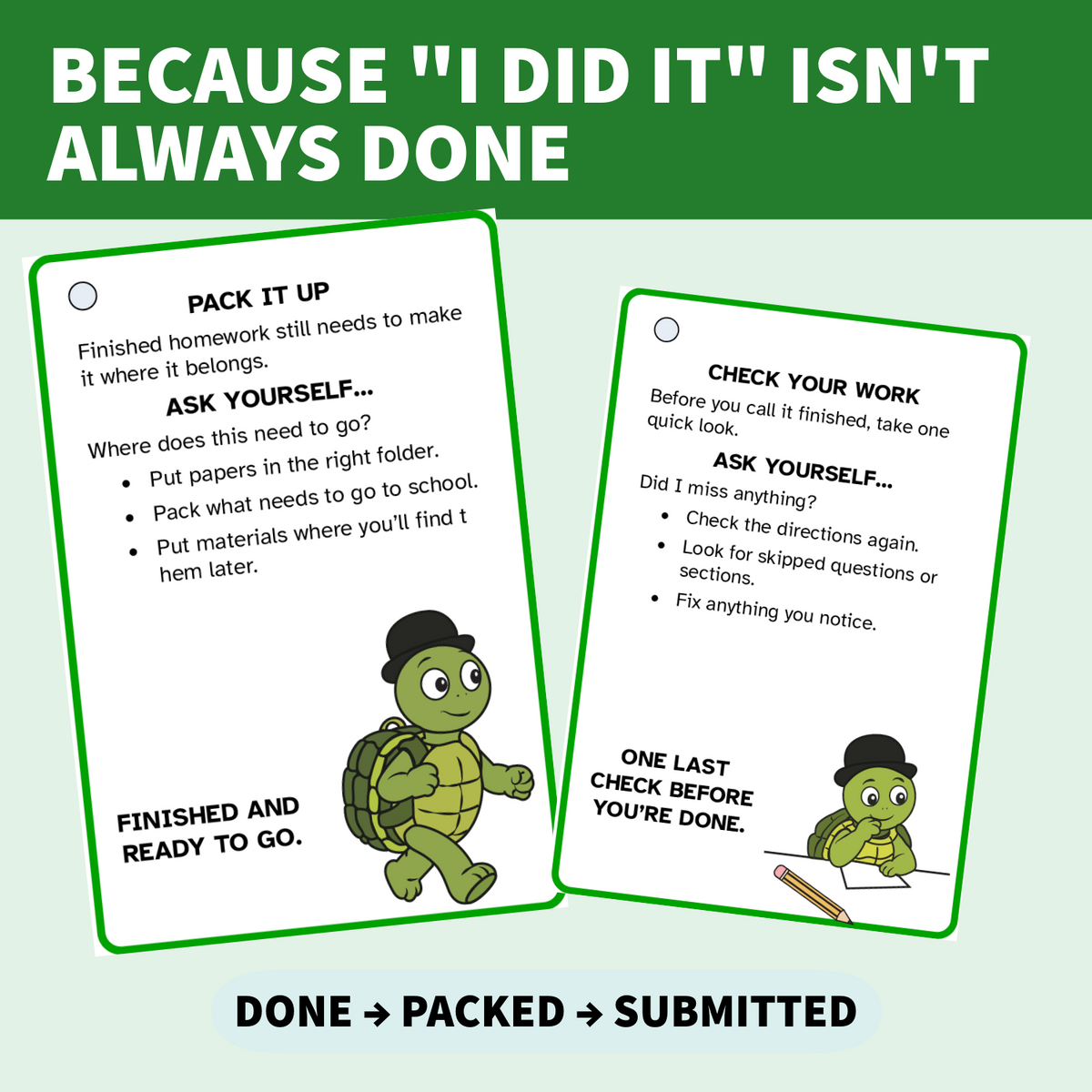
Homework Completion Strategy Cards
Regular price
$25.00 USD
Regular price
Sale price
$25.00 USD
Shipping calculated at checkout.
Quantity


Digital Resources
-

Homework Completion Strategy Cards • Printable PDF
View Homework Strategy Deck on TPTExplore 25 practical strategies for planning homework, managing the workload, getting unstuck, and turning finished work in. Includes color and black-and-white cards, a personalized cover card, a student reflection tool, and adult guidance for building a selection of strategies that helps your learner.
-

Homework Completion Toolkit • Printable PDF
View Homework Toolkit on TPTSix planning and reflection tools help learners organize assignments, break work into smaller steps, reset focus, get unstuck, catch up on missing work, and plan the final stretch. Also includes 25 Homework Completion Strategy Cards in color and black-and-white versions—the same strategies offered in the separate printable card resource.

