
🧠 Understanding PDA
Lower Activation. Interrupt Escalation. Protect Capacity.
-
Rethinking PDA — Regulation-First Framework
Regular price $38.00 USDRegular price -
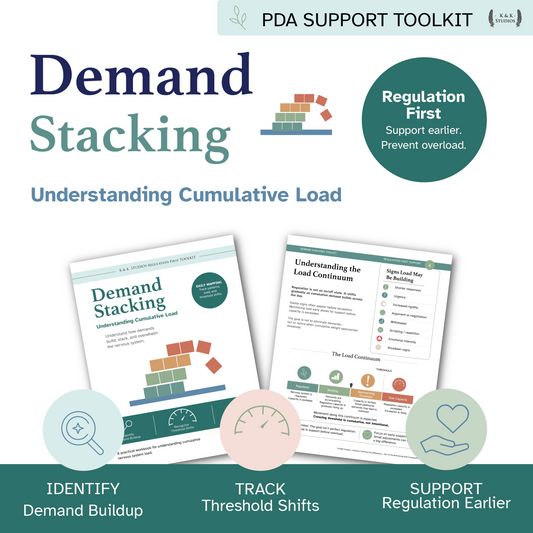
Demand Stacking Toolkit | Understanding PDA Overwhelm & Cumulative Load
Regular price $12.00 USDRegular price -
PDA Ultimate Support Library – 30 Regulation-First Tools
Regular price $100.00 USDRegular price$180.00 USDSale price $100.00 USDSale



Pathological Demand Avoidance (PDA) is not defiance or manipulation — it is a nervous system response to pressure.
Children with PDA often experience everyday expectations as threats to autonomy or safety. When pressure rises, their capacity to engage can quickly collapse.
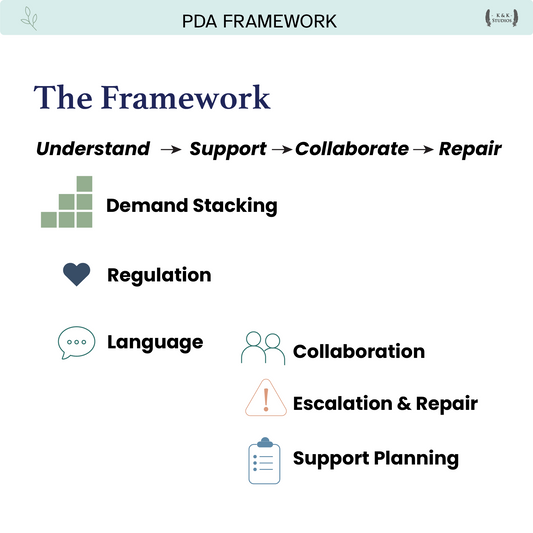
This collection focuses on understanding the foundations of PDA, including how demand activation, nervous system regulation, and autonomy interact.
Inside these resources you’ll find tools that help explain:
- why demands trigger avoidance
- how pressure affects nervous system capacity
- why traditional behavior approaches often backfire
- how regulation-first support changes outcomes
These materials are designed to help parents, educators, and therapists better understand the PDA profile so support strategies can begin with insight rather than compliance.
When we understand the nervous system first, everything else becomes clearer.
📉 Reducing Pressure
Practical Strategy Tools for Interrupting Escalation
-
Reducing Activation Before It Spikes | Early Signs of PDA Escalation
Regular price $13.00 USDRegular price -
Escalation & Cumulative Load Toolkit | Understanding PDA Overwhelm
Regular price $22.00 USDRegular price -
Gentle Starts & Pick Your Path | Low-Demand PDA Support Toolkit
Regular price $7.00 USDRegular price -
Demand Stacking Toolkit | Understanding PDA Overwhelm & Cumulative Load
Regular price $12.00 USDRegular price -
PDA Energy & Regulation Bundle - Sensory, Burnout & Nervous System Supports
Regular price $21.00 USDRegular price -
PDA Meltdown, Shutdowns & Burnout Bundle
Regular price $19.00 USDRegular price


This collection focuses on practical tools that help adults lower demand activation and create environments where collaboration becomes possible.
Inside these supports you’ll find strategies for:
- reducing demand stacking
- shifting language to lower pressure
- responding to escalation safely
- adapting expectations to match capacity
- supporting autonomy while maintaining connection
These tools help translate regulation-first PDA principles into everyday interactions at home, in therapy, and in educational settings.
When pressure decreases, capacity has room to grow.
⚡️ Regulation & Capacity
-
Demand Stacking Toolkit | Understanding PDA Overwhelm & Cumulative Load
Regular price $12.00 USDRegular price -
PDA Energy & Regulation Bundle - Sensory, Burnout & Nervous System Supports
Regular price $21.00 USDRegular price -
PDA Meltdown, Shutdowns & Burnout Bundle
Regular price $19.00 USDRegular price
These tools help adults recognize when a child’s capacity is dropping and support regulation before escalation occurs.
Inside this collection you’ll find supports that help identify:
- sensory overload
- nervous system fatigue
- emotional burnout
- early warning signs of escalation
- shifts in capacity across the day
Rather than pushing through overwhelm, these tools focus on noticing when a child’s system needs safety, recovery, or reduced expectations.
When regulation comes first, capacity slowly returns.
These supports are designed for parents, therapists, and educators who want to better understand what a child’s nervous system is communicating — and respond in ways that protect trust, safety, and connection.
🏡 Real-Life PDA Support
-
Gentle Starts & Pick Your Path | Low-Demand PDA Support Toolkit
Regular price $7.00 USDRegular price -
PDA School Communication Scripts | Collaborative Advocacy & Lower-Pressure Support Language
Regular price $10.00 USDRegular price -
PDA Meltdown, Shutdowns & Burnout Bundle
Regular price $19.00 USDRegular price -
PDA Ultimate Support Library – 30 Regulation-First Tools
Regular price $100.00 USDRegular price$180.00 USDSale price $100.00 USDSale

Transitions, school expectations, routines, and communication with other adults can quickly create pressure that overwhelms a PDA nervous system.
This collection includes practical tools designed for everyday environments, including:
- school supports and accommodations
- communication tools for educators and caregivers
- low-demand routine structures
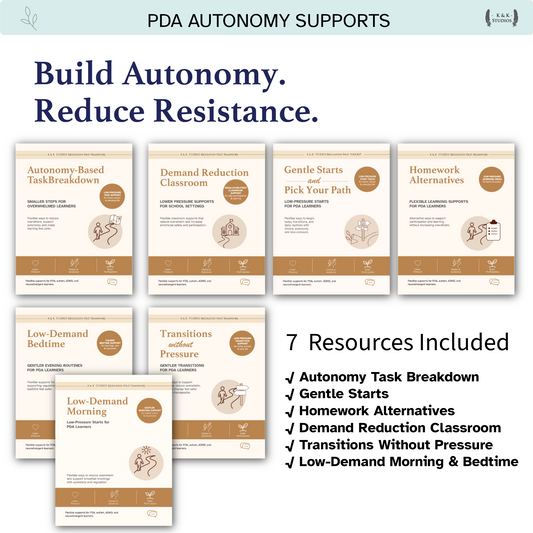
- strategies for navigating homework, mornings, and transitions
These resources help translate PDA understanding into real-world situations so families and professionals can create environments where children feel safer, more capable, and more supported.
Small adjustments in daily life can dramatically reduce pressure and increase participation.